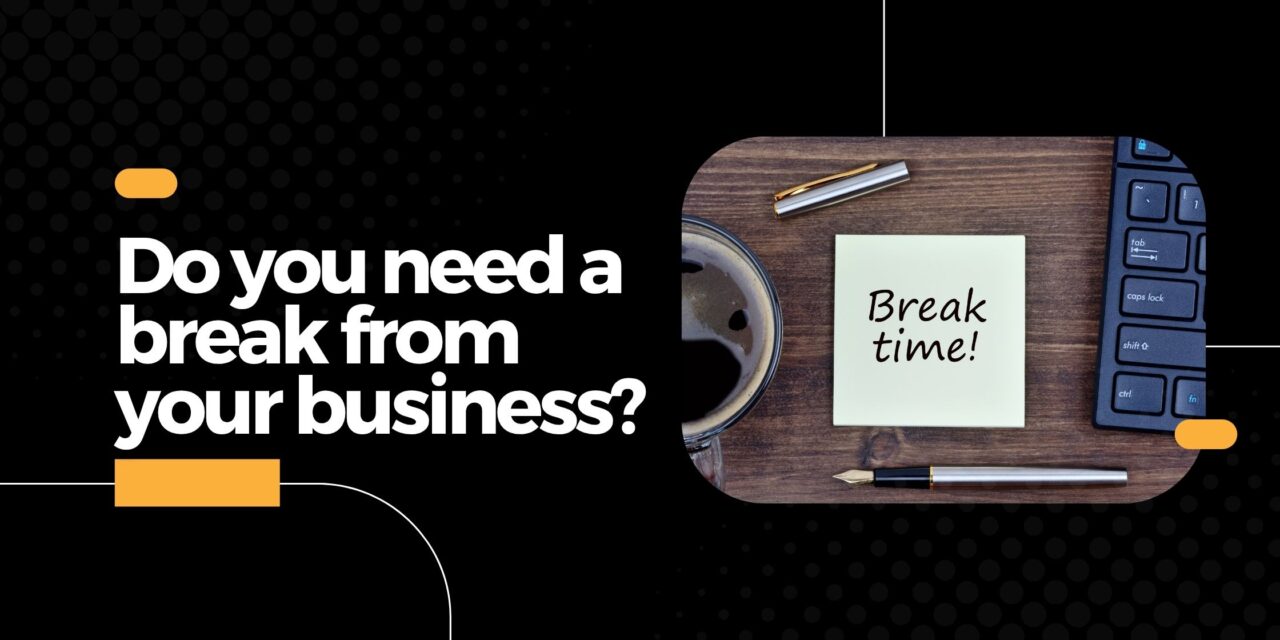
Here’s a sobering fact: one in seven small business owners can’t recall the last time they took a proper break. Even more concerning, only 43 per cent take at least four weeks off each year, while one in four squeeze in two weeks or less.
According to a survey by OnDeck Australia, not only are small business owners reluctant to step away from the wheel, but when they do, they often can’t switch off. A staggering 77 per cent think about their business on holiday, and one in five still check in regularly. This isn’t just a workaholic habit, it’s a signal of something deeper at play.
As a business strategist and mentor, I’ve seen it time and again: passionate, committed business owners who are running on empty. They’ve built something worthwhile, but they’re caught in the cycle of always being “on”, afraid that stepping back means letting it all fall apart.
But the truth is, taking a break is not an indulgence. It’s essential. It’s a business strategy that leads to better performance, clearer thinking, and a more sustainable version of success.
Why Business Owners Struggle to Take Time Off
Let’s call it what it is: guilt, fear, and habit. The 2015 Xero survey echoed what many still feel:
- 42 per cent believed they needed to be available at all times as the decision maker
- 37 per cent couldn’t take time off because they were the sole employee
- 25 per cent were simply too busy
- 32 per cent admitted they couldn’t relax without knowing what was happening in their business
Sound familiar? If you’ve found yourself nodding, you’re not alone. These feelings are common, but they’re not a healthy long-term strategy.
What Happens When You Do Take a Break?
Here’s the good news: taking time off actually improves business performance.
The research tells us that even short breaks can help reduce stress, prevent burnout, and spark creativity.
One Ernst & Young study found that for every additional 10 hours of holiday taken, employees’ performance improved by 8 per cent. And while you might not be an employee, the principle stands: rest fuels performance.
In your own business, this could look like fresh ideas, renewed energy, or simply the clarity to make more strategic decisions. And if you have a team, showing them it’s okay to step back builds trust and sets a healthy example.
How to Take a Break Without Breaking Your Business
Just like anything in business, taking time off requires a plan.
Here’s how to make it part of your strategic rhythm:
1. Shift Your Mindset
See your break as a business investment, not a cost. Plan it into your financials, just like you would any other strategic activity.
2. Prepare Your People
If you have a team, start training them now. Build up their confidence and capability so they can manage in your absence. And if you don’t yet have a “right-hand” person, make it a strategic goal.
3. Create Systems
Document your processes. Make sure your team knows what to do and how to do it without you there. Systems reduce dependency and free you up.
4. Establish Contingency Plans
Who handles what if something goes wrong? Outline this clearly and ensure someone is empowered to act on your behalf in an emergency.
5. Communicate with Clients
Let your clients know in advance. Update your email signature, set up your out-of-office replies, and clarify who they can reach in the meantime.
6. Use Technology Strategically
Yes, cloud-based tech means you can check in. But that doesn’t mean you should. If you must, set strict boundaries, when, how often, and only for critical issues.
7. Actually Disconnect
This is the hard part, but it matters most. A holiday is a holiday. Honour it. The more fully you disconnect, the more benefit you gain.
The Final Word
Taking a holiday shouldn’t be a “nice-to-have” that gets bumped every year. It’s a strategic tool for sustaining your energy, enhancing your leadership, and building a better business.
As business owners, we often talk about creating freedom, work-life balance, and living life on our terms. That starts with giving yourself permission to pause.
Remember, clarity comes from stepping back, not pushing through. Make time for the break your business (and your brain) need. You’ll come back better, stronger, and ready for what’s next.